


From packed art studios and endless street food to smog, traffic, and questionable sidewalks—why Mexico City remains one of the few places I’d seriously consider living for several months.
One of the best examples of why I like Mexico City came from a relatively ordinary two-story art studio.
I bought a ticket to an exhibition there. Nothing about the venue suggested some massive cultural event. It was a modest space, the kind of place you might easily walk past without thinking twice.
Except the line was out the door.
People were showing up in numbers to attend an art exhibition at a small studio. Just another cultural happening in a city that apparently has an audience for everything.
And that, to me, captures what makes Mexico City special.
The city has range.
Not just a decent selection of restaurants or a few interesting things to do on the weekends. I’m talking about entire communities built around interests that might barely register elsewhere. Art, music, food, fashion, history, nightlife, and seemingly every other subculture you could imagine.
There’s enough activity, enough people, and enough cultural momentum for many of these interests to develop their own scenes.
But there’s another side to the experience.
Sometimes the city smells like somebody emptied an ashtray into a public restroom. The traffic can test your patience, the sidewalks require a certain level of vigilance, and depending on the day, you might look toward the skyline and find a thick layer of haze staring back at you.
A fascinating place.
Just remember to breathe responsibly.
I originally spent a month in Mexico City at the beginning of 2025, arriving in time to celebrate New Year’s in the historic Zócalo. Since then, I’ve returned to see whether the city still held the same appeal.
It did.
In fact, coming back helped clarify what I liked about it in the first place.
It wasn’t simply the attractions, restaurants, or excitement of discovering a new place. It was the sheer amount of life happening around me—and the possibilities that come with having access to it.
Still, I’m not interested in pretending Mexico City is some urban paradise.
There are legitimate drawbacks here, especially if you’re evaluating it as somewhere to spend several months rather than somewhere to enjoy a vacation.
So here are my field notes: what I liked, what I didn’t, and why CDMX remains on my shortlist despite some very obvious problems.
The Good: A City With Almost Too Many Options
I’ve spent a considerable amount of time living and traveling abroad, and few places offer the breadth of experiences you’ll find in Mexico City.
To get something comparable, you really have to start looking at places like New York or another major international metropolis.
That’s not necessarily because CDMX does everything better than other cities.
It simply does so much.
My introduction was New Year’s Eve in Zócalo, the massive public square in the historic center. Thousands of people gathered near the Metropolitan Cathedral, with music and fireworks welcoming the new year.
Not a bad introduction.
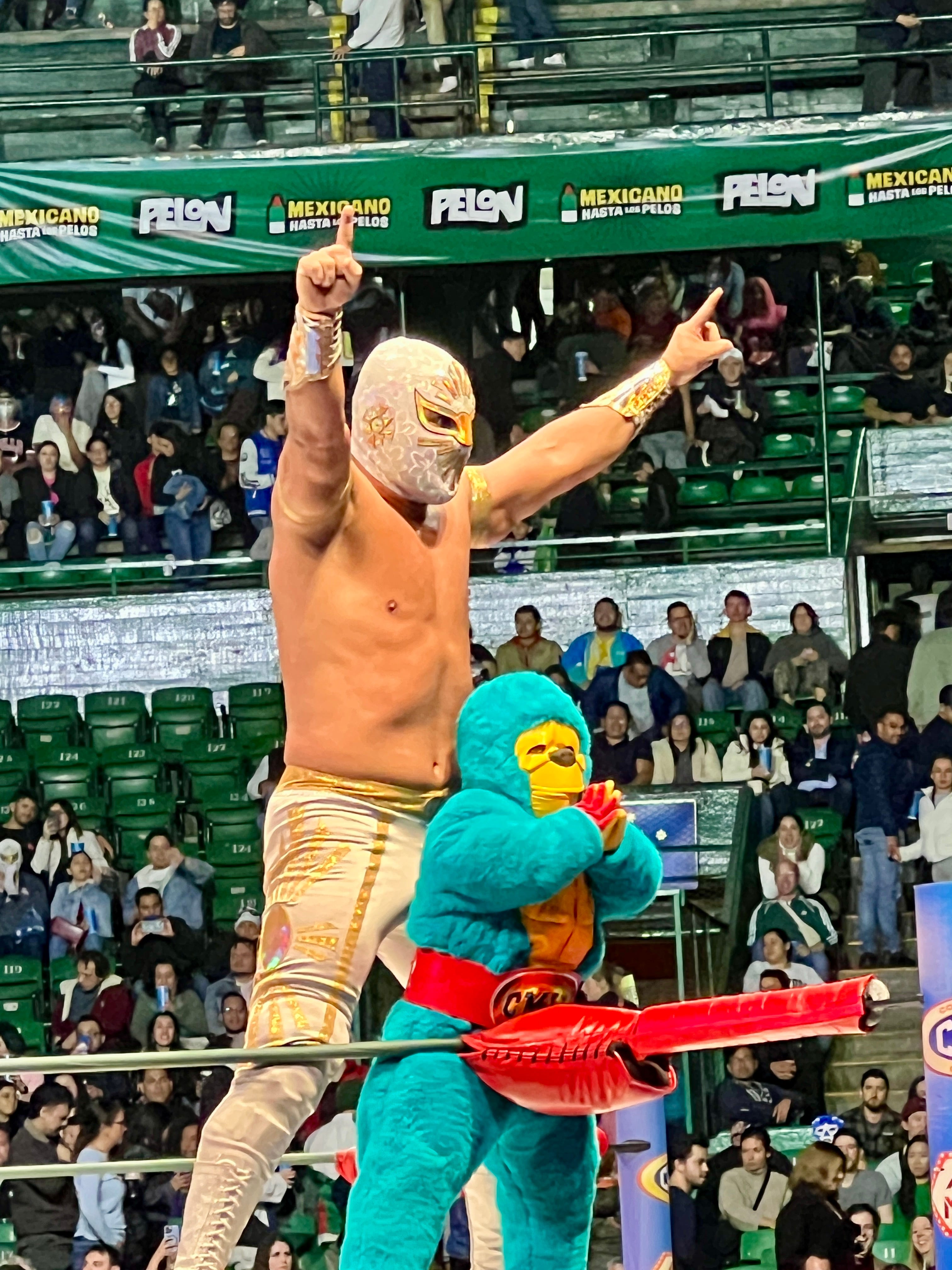
Within my first few days, I was exploring Roma and Condesa, eating my way through various taco stands, and eventually attending a lucha libre match.
If you’ve never experienced Mexican wrestling, imagine professional wrestling with the theatrical absurdity turned up several notches.
The characters are ridiculous, the performances are entertaining, and the crowd participates with a level of enthusiasm that makes the entire thing feel more like a cultural gathering than a sporting event.
I loved it.
But the thing that stayed with me wasn’t any single activity. It was how easily I could move between entirely different experiences.
I could spend one day wandering through historic buildings and museums, another exploring neighborhoods and restaurants, and the next attending an event I hadn’t even known existed.
That’s a valuable quality in a city.
I’ve lived in places where you eventually develop a fairly predictable rotation of activities. You visit the same restaurants, frequent the same areas, and spend your weekends choosing between a limited number of options.
Nothing wrong with that. I appreciate a good routine.
But I also like having the ability to break one.
Mexico City makes that remarkably easy.
Even on my return visit, when I was no longer discovering everything for the first time, the scale remained impressive.
Main streets and side streets alike were packed with businesses, restaurants, food stands, shops, and people going about their lives. You could turn off a major avenue and find another entire stretch of activity you hadn’t noticed before.
There’s something energizing about that.
You don’t need every outing to be a carefully planned excursion. Sometimes you just walk, explore, and see what happens.
And in Mexico City, there’s usually something happening.
The Social Scene: There’s a Community for Almost Everything
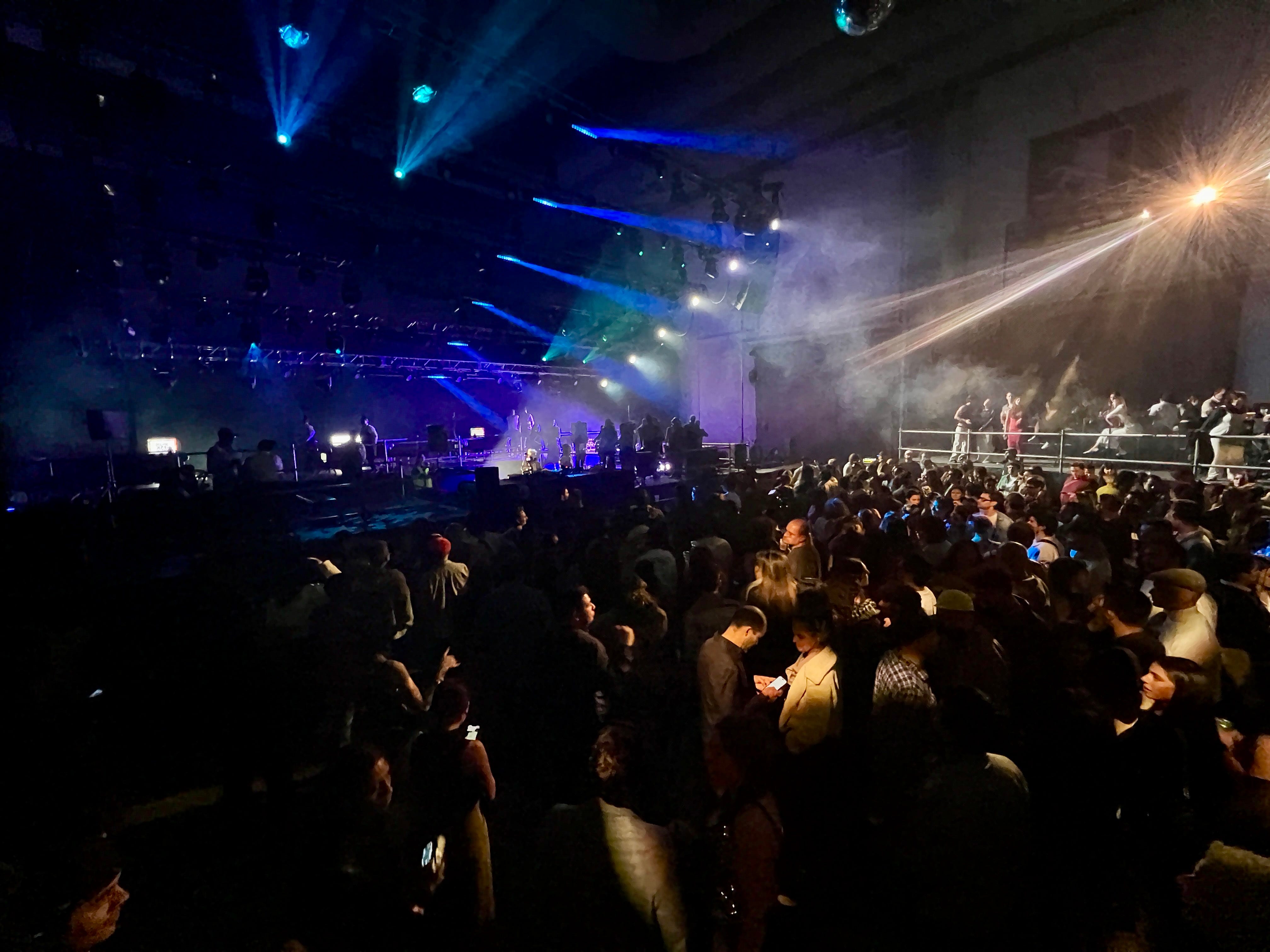
This is probably Mexico City’s biggest advantage over most places I’ve experienced.
It has the population, cultural diversity, and social infrastructure to support entire communities around different interests.
That art exhibition I mentioned earlier is a perfect example.
In some cities, an independent art event might attract a small circle of enthusiasts. In Mexico City, a relatively simple studio can draw a crowd large enough to spill into the street.
It’s a reminder that the city’s social ecosystem operates on a different scale.
You can find communities centered around art, electronic music, dance, fitness, language, business, food, and interests far more specific than those.
And they aren’t necessarily tiny groups meeting once every few months. Many have established venues, regular events, and dedicated audiences.
That gives the city a particular kind of energy.
The international mix adds another dimension.
Mexico City attracts people from across Latin America, alongside Europeans, Americans, and visitors from farther abroad.
Spanish may be the common language, but the people speaking it come with vastly different backgrounds, accents, experiences, and perspectives.
For someone interested in languages, cultural exchange, and meeting people across borders, that’s appealing.
The city is unmistakably Mexican, yet internationally connected.
And unlike destinations where the foreign community feels almost completely detached from local life, Mexico City has enough cultural depth that you can choose how involved you want to become.
Of course, you can still spend your entire stay bouncing between foreigner-heavy cafés and English-speaking social circles.
That’s a choice.
But there’s a much larger city outside that bubble.
Another advantage is walkability, at least within many of the central neighborhoods I spent time exploring.
You can move between cafés, restaurants, shops, galleries, parks, and bars without constantly needing transportation. That makes spontaneous activity easier.
You might leave home intending to get coffee and end up discovering an exhibition, a bookstore, or somewhere interesting to eat.
That density creates opportunities for casual interactions and social discovery that aren’t as easy to reproduce in a more car-dependent environment.
The sheer density and variety of Mexico City’s cultural scene operate on another level.
The closest comparison in my mind is New York City.
And that’s a meaningful compliment. Still, there’s an important distinction.
Having access to thousands of people and activities doesn’t automatically mean you’re going to develop meaningful relationships.
A massive social scene can be great for meeting people without necessarily being great for building a community.
I’d want to test that during a longer stay.
Can I establish friendships, become a regular in certain circles, and develop a social life that extends beyond events and nights out?
Because there’s a difference between having somewhere to go every night and having people you genuinely connect with.
Mexico City seems to offer plenty of opportunities for both.
But the second requires more than simply showing up.
The Food: You Could Spend Months Eating Through This City


Now, the food.
Mexico City deserves much of the praise it receives.
During my first visit, I made a habit of wandering into small restaurants and taco stands without knowing much about them beforehand.
Sometimes I couldn’t even remember the names afterward.
Didn’t matter.
The food was good.
Tacos al pastor, suadero, gringas, quesadillas, tamales, pozole—the options seemed endless.
And the capital brings together culinary traditions from across Mexico, alongside an increasingly international dining scene.
You can eat traditional Mexican food, explore regional specialties, find cuisines from other countries, or spend considerably more money at upscale restaurants experimenting with contemporary techniques.
That’s another example of the city’s range.
You can eat extremely well without committing to an expensive restaurant every time you leave home.
In fact, some of the most satisfying experiences come from the simplest places.
A busy taco stand with a few people gathered around it can be every bit as memorable as a polished dining room.
Sometimes more.
Of course, there are disappointing meals too.
During my first stay, I encountered overpriced tourist restaurants, underwhelming tortas, and places serving food that seemed designed more around foreign expectations than flavor.
A fashionable interior and a beautifully designed menu don’t guarantee anything.
The guy behind the trompo might still be running the better operation.
What I appreciate is that Mexico City gives you so many alternatives.
If somewhere disappoints, there are another dozen places worth trying.
And because food is such a central part of daily life, that variety becomes more than a tourist attraction.
For someone considering a longer stay, it’s a genuine lifestyle advantage.
I could comfortably spend several months exploring Mexico City’s food scene and still have plenty left to discover.
That’s both an endorsement and a potential financial liability.
The History and Culture Still Hold Up


One thing I deliberately revisited was the city’s historic and cultural landmarks.
I returned to the Palacio de Bellas Artes and Castillo de Chapultepec, two places that made an impression during my earlier time in CDMX.
And they still held up.
Bellas Artes is one of those buildings that demands your attention even before you enter. The architecture alone is worth stopping to appreciate, and its position near the historic center makes it part of a much larger urban experience.
You’re surrounded by streets, shops, crowds, monuments, and layers of Mexican history.
Then there’s Chapultepec.
The park remains one of my favorite parts of the city. It provides a welcome contrast to the noise and density of the surrounding metropolis.
You can spend time walking through the grounds, exploring the castle, and enjoying a space that feels substantially different from the commercial streets outside.
I noticed what appeared to be a greater police presence during my return, although I can’t say whether that reflects any broader change in security.
Either way, I enjoyed the experience again.
What I appreciate about Mexico City is how accessible so much of its cultural heritage feels.
Historic sites and museums aren’t isolated attractions on the outskirts of town. They’re integrated into the city’s everyday geography.
You can encounter centuries of history while going about an otherwise ordinary day.
That matters because cultural access isn’t something you only benefit from as a tourist.
Living somewhere with excellent museums, historic architecture, public parks, and active cultural institutions gives you reasons to keep exploring long after you’ve settled in.
The fact that I wanted to revisit places I’d already seen says something about their lasting appeal.
Not everything needs to be new to remain interesting.
The Bad: The Air Quality Is a Serious Problem
Now for the part that makes me hesitate.
Mexico City’s air quality.
There’s no clever way around this one.
On certain days, the haze hanging over the city is impossible to ignore.
But the issue isn’t limited to looking at the skyline.
Walking across a busy avenue or riding in a taxi or Uber with the windows down can expose you to some pretty harsh smells from traffic.
There were moments when the exhaust and surrounding air were unpleasant enough that I wanted to get away from the road.
I wouldn’t claim to have experienced any serious health problems from my visits.
But I certainly noticed the conditions.
And unlike an overpriced restaurant or an inconvenient apartment, this isn’t something you can completely avoid through better planning.
Mexico City sits in a high-altitude basin, and its geography and weather patterns can contribute to poor pollutant dispersion. Vehicle emissions and other sources add to the problem.
The city operates an extensive air-quality monitoring system, and the health risks of long-term exposure to outdoor air pollution are well established by organizations such as the World
Visible haze alone doesn’t tell you the exact concentration of pollutants in the air, but the broader issue deserves to be taken seriously.
And this is where my evaluation changes depending on how long I intend to stay.
For a week or two, I might treat it as an unfortunate part of visiting a large metropolis.
For several months, I’d pay closer attention to local air-quality reports and adjust outdoor activity when necessary.
For years?
That’s a much bigger conversation.
I enjoy being active. I like walking, training, exploring neighborhoods, and spending time outdoors.
So I have to ask whether the environment supports those habits.
Mexico City offers an exceptional amount of cultural and social stimulation, but I can’t pretend environmental quality doesn’t matter simply because I’m enjoying myself.
The city might be a phenomenal place to spend a season without necessarily being where I’d choose to spend the next decade.
Those are two very different decisions.
The Sidewalks: An Unnecessary Adventure
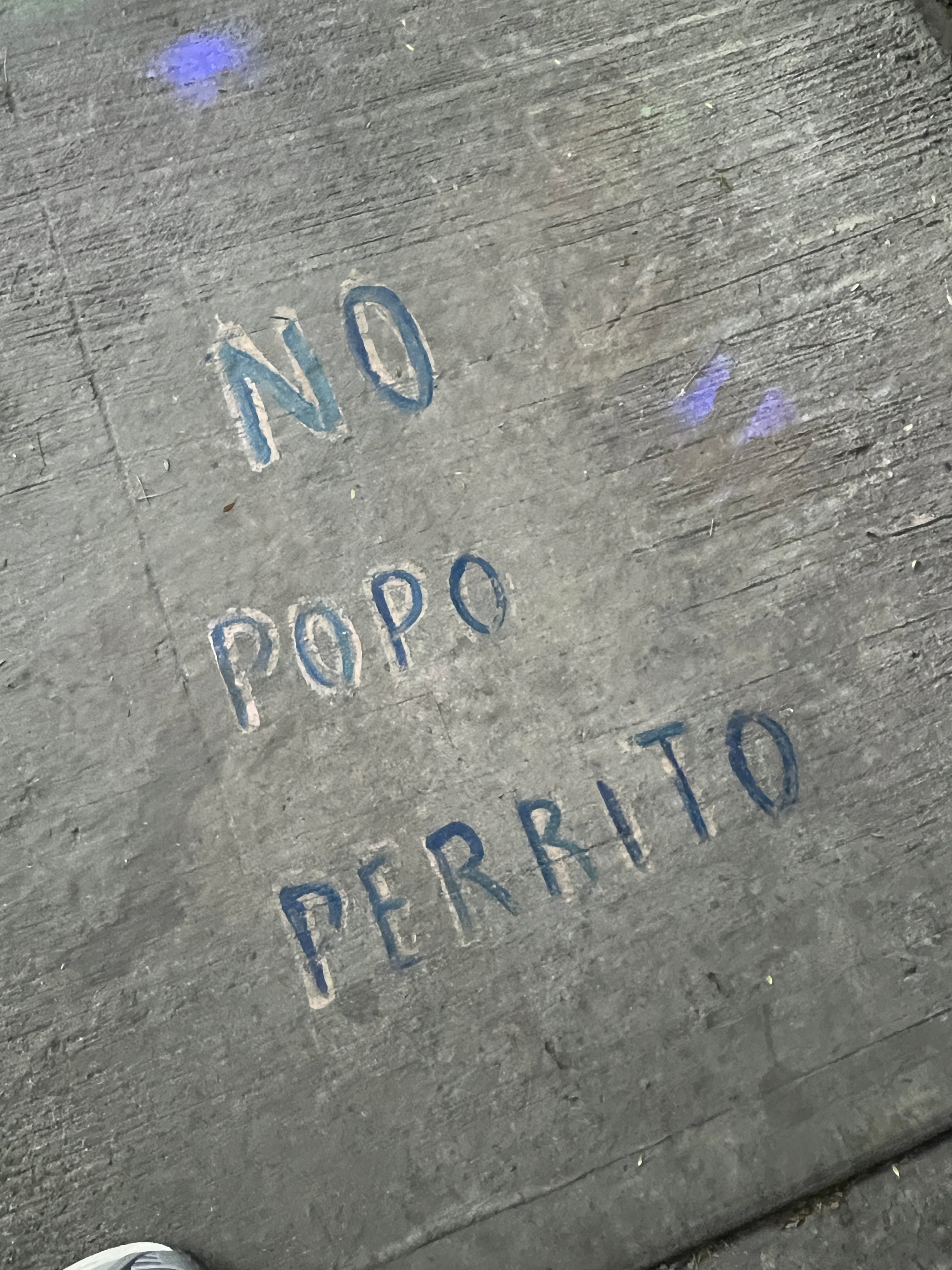
If the air pollution is my biggest serious concern, street cleanliness is probably my most consistent everyday complaint.
Dog waste.
Urine smells.
Trash.
Uneven sidewalks.
Mexico City has some beautiful, tree-lined streets. It also has stretches where you need to pay close attention to where you’re putting your feet.
You can be admiring an attractive building, enjoying the neighborhood, and suddenly find yourself navigating around something a dog left behind.
A small reminder to remain humble.
Of course, these issues aren’t unique to Mexico City.
But they were noticeable enough that I couldn’t ignore them.
And they become particularly frustrating because the city is otherwise so enjoyable to explore on foot.
I want to walk through interesting neighborhoods, discover businesses, and spend time outside.
Having to navigate trash, unpleasant smells, or damaged pavement detracts from that experience.
It’s also worth remembering that the attractive neighborhoods frequently showcased online represent only part of the city.
Street maintenance, sanitation, accessibility, and infrastructure can vary considerably from one area to another.
A few picturesque blocks in Roma don’t tell you everything about life across CDMX.
Which brings me to a larger point.
There’s a difference between a city being visually impressive and a city being consistently pleasant to navigate.
Mexico City can be both.
Sometimes on the same street.
Traffic, Transportation, and the Price of Scale
The other major compromise is movement.
Mexico City is enormous, and getting around can be exhausting.
The transportation network is extensive. Between the Metro, Metrobús, buses, trolleybuses, and rideshare services, you have multiple ways to navigate the metropolis.
I covered those options in my earlier guide to Mexico City’s public transportation.
And having alternatives to owning a car is a genuine advantage.
But getting from one place to another can still require more time and effort than you’d expect.
Traffic can turn relatively ordinary trips into drawn-out affairs. Public transportation is affordable, but crowded trains during peak hours aren’t exactly relaxing.
And while central neighborhoods can be quite walkable, the city as a whole isn’t something you can simply stroll across.
This is one of the contradictions that comes with living in a metropolis.
You have access to almost everything.
Accessing it isn’t always convenient.
I experienced smaller frustrations during my original stay too: apartment amenities that weren’t quite what I expected, inconsistent service, and unexpected import charges when trying to order clothes online.
Individually, none of those things is particularly dramatic.
Together, they’re reminders that living abroad involves an accumulation of little inconveniences.
Things that barely matter on vacation can become much more irritating when you’re trying to maintain a consistent routine.
There’s a reason I pay attention to that.
I don’t just want a place where I can have an exciting Saturday.
I want somewhere that makes an ordinary Tuesday manageable.
Where I’d Actually Live: Narvarte vs. Roma
During my original stay, I explored several neighborhoods, including Roma, Condesa, Polanco, Centro Histórico, and Narvarte.
And after spending more time thinking about what I actually want from a home base, my preferences are relatively clear.
Narvarte is probably where I’d live. Roma is where I’d be tempted to spend all my money.
Roma and Condesa are undeniably attractive.
Tree-lined streets, parks, restaurants, cafés, cocktail bars, and a walkable urban environment make them especially convenient for visitors and international residents.
They’re also some of the easiest areas to socialize in.
You can step outside and have access to an enormous selection of activities without having to cross half the city.
I understand why so many foreigners gravitate toward them.
I enjoy them too.
But that convenience comes at a price.
Housing and dining can be expensive by local standards, and the atmosphere in certain pockets is shaped heavily by affluent residents, foreign visitors, and businesses catering to international tastes.
You can have a comfortable experience while remaining surprisingly disconnected from the wider city.
That’s not necessarily bad. But it’s something to be conscious of.
Then there’s Polanco, which offers an even more upscale experience, with luxury shopping, polished streets, and high-end dining.
I appreciate the area, but it isn’t where I’d naturally gravitate for an extended stay.
Centro Histórico is fascinating for a different reason.
It’s busy, culturally significant, and packed with things to explore.
But I’d rather visit than deal with that level of activity every day.
Narvarte offers a different balance.
It’s more residential, feels more locally oriented, and generally offers better value than the fashionable central neighborhoods.
You still have restaurants, neighborhood businesses, and plenty of places to eat, but the atmosphere is better suited to the kind of everyday routine I’d want.
I don’t need to live above a cocktail bar.
I need somewhere I can train, work, eat well, buy groceries, and have a reasonably comfortable home.
Then, when I want to enjoy the city’s social and cultural offerings, I can head out.
Narvarte seems like a strong candidate for that arrangement.
That said, if I had a larger housing budget and wanted maximum convenience and easy access to restaurants, cafés, and social events, I’d seriously consider Roma.
There are advantages to placing yourself directly in the middle of the action.
The question is whether those advantages justify the additional cost.
And that’s something I’d evaluate based on the lifestyle I intended to maintain rather than whichever neighborhood happened to look best on Instagram.
Could I Actually Live Here?
That’s the bigger question behind all of this.
I’ve visited enough places to understand how easy it is to confuse an enjoyable trip with a sustainable lifestyle.
When you’re visiting, your priorities are different.
You want to explore, eat, socialize, and experience as much as possible.
You can tolerate inconveniences because you know they’re temporary.
But once you start thinking about staying somewhere for several months, the calculation changes.
Suddenly, things like commute times, apartment quality, neighborhood convenience, grocery shopping, exercise, and reliable infrastructure matter considerably more.
And the question isn’t simply whether the city offers an exciting lifestyle.
It’s whether it supports the life you’re trying to build.
For me, that involves a combination of professional independence, business development, health, cultural immersion, and meaningful relationships.
I want access to interesting people and opportunities, but I also want enough stability to remain productive.
I enjoy exploring, but I don’t want my entire life to become one extended sightseeing itinerary.
That’s where Mexico City becomes especially interesting.
Its scale provides an incredible amount of opportunity.
There’s a diverse international population, established cultural communities, a massive food scene, and countless ways to spend your free time.
Its connectivity to the United States is another practical advantage for someone who wants to maintain relationships and business interests across borders.
But I’d have to weigh those benefits against the pollution, urban congestion, and general friction that comes with living in a city of this size.
A few months would give me a much better understanding of that balance.
I’d want to establish a routine, spend time in neighborhoods outside the usual international circuit, build relationships, and experience the city without constantly behaving like a visitor.
I’d also want to see how I feel once the novelty disappears.
Because that’s when you really learn whether a place fits.
The first month tells you what a city has to offer.
The following months tell you what living there actually demands.
And those answers aren’t always the same.
Final Verdict: Mexico City Is Worth a Longer Stay
After my initial month and a return visit, Mexico City remains one of the most compelling places I’ve experienced.
Not because it’s perfect.
Far from it.
The pollution is a legitimate concern. Street cleanliness leaves plenty to be desired. Traffic can be exhausting, and the city’s sheer size creates logistical headaches.
But the positives are substantial.
The food, the history, the cultural diversity, the walkability of its central neighborhoods, and the scale of its social scene create a combination that’s difficult to reproduce outside another major metropolis.
What stands out most is the amount of opportunity for discovery.
You can develop different interests, enter different social circles, experience different neighborhoods, and continually find new things to do.
A city like that gives you room to evolve.
And that’s something I value.
I’m not prepared to say I’d establish a permanent home in Mexico City.
The environmental concerns alone deserve more consideration before making that kind of commitment.
But would I return for several months?
Absolutely.
I’d probably start in Narvarte, settle into a routine, and spend more time exploring everything the city offers beyond the obvious attractions.
Maybe after several months, I’d decide that the pollution and everyday inconveniences are too much.
Or maybe I’d find that the cultural and social advantages more than compensate for the friction.
Either way, I’d have a better understanding of what I actually want.
Because the point of exploring different places isn’t to convince yourself that every interesting destination should become your next home.
It’s to figure out which environments support the life you want to live.
And sometimes that means recognizing that a city can be extraordinary without being ideal.
Mexico City hasn’t convinced me to move there permanently.
But it’s convinced me that a few more months would be time well spent.
For a place where I occasionally question the wisdom of opening a car window, that’s a pretty strong endorsement.
Your Turn
When choosing somewhere to live, what matters more to you: a clean, comfortable, predictable environment—or access to a wider variety of people, experiences, and opportunities?
Ideally, we’d have both.
But most cities require some kind of compromise.
I’m curious which trade-offs you’re willing to make, and which ones are absolute dealbreakers.
This piece is part of my ongoing Mexico City field notes. For more practical details, check out my earlier articles: One Month in Mexico City: A Full Recap, My First Week in Mexico City, and How to Navigate Public Transportation in CDMX.